Learn what to expect when visiting the Emergency Department. Learn More


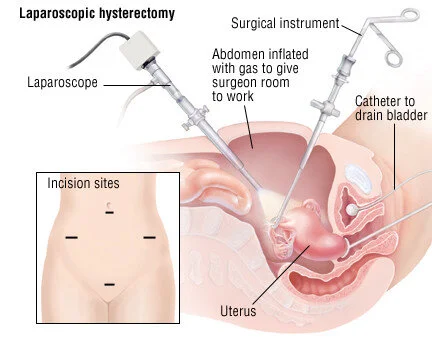
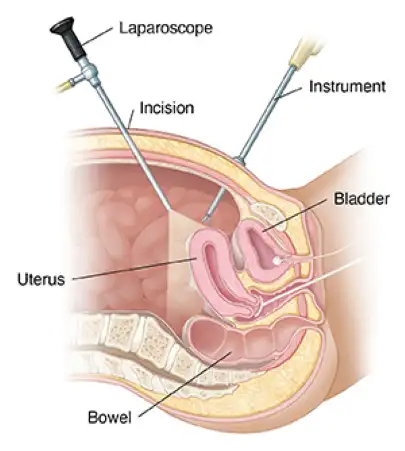
A laparoscopic hysterectomy is a minimally invasive surgical procedure in which a surgeon removes the uterus using small keyhole incisions in the abdomen. Instead of making one large cut (as in an open abdominal hysterectomy), surgeons use a laparoscope—a thin tube with a camera and light—to view the pelvic organs on a monitor and perform the surgery with specialized instruments.
Depending on the patient’s condition, the surgery may remove:
Only the uterus (simple hysterectomy)
The uterus and cervix (total hysterectomy)
The uterus, cervix, ovaries, and/or fallopian tubes (if medically needed)
Common medical reasons include:
Uterine fibroids causing pain, bleeding, or pressure
Endometriosis or adenomyosis
Abnormal uterine bleeding not responding to other treatments
Chronic pelvic pain
Uterine prolapse
Cancer or precancerous conditions (uterus, cervix, or ovaries)
Small incisions (typically 3–4, each 0.5–1 cm) are made in the abdomen.
CO₂ gas is used to inflate the abdomen for better visibility.
The laparoscope and surgical instruments are inserted.
The uterus is detached from surrounding tissues.
It is removed either in small pieces through the incisions or intact through the vagina, depending on the technique.
The incisions are closed with sutures or surgical glue.
Smaller incisions → less pain
Shorter hospital stay (often same day or 1 night)
Faster recovery (2–4 weeks instead of 6–8)
Lower risk of infection and bleeding
Minimal scarring
Like any surgery, it carries risks such as:
Bleeding
Infection
Injury to nearby organs (bladder, bowel, ureters)
Blood clots
Reaction to anesthesia
Rarely, the need to switch to open surgery
Most people:
Walk on the same day of surgery
Resume normal activities within 2–4 weeks
Experience mild abdominal discomfort or shoulder-tip pain (from CO₂ gas)
Should avoid heavy lifting or sexual intercourse for 4–6 weeks, or as advised by the doctor
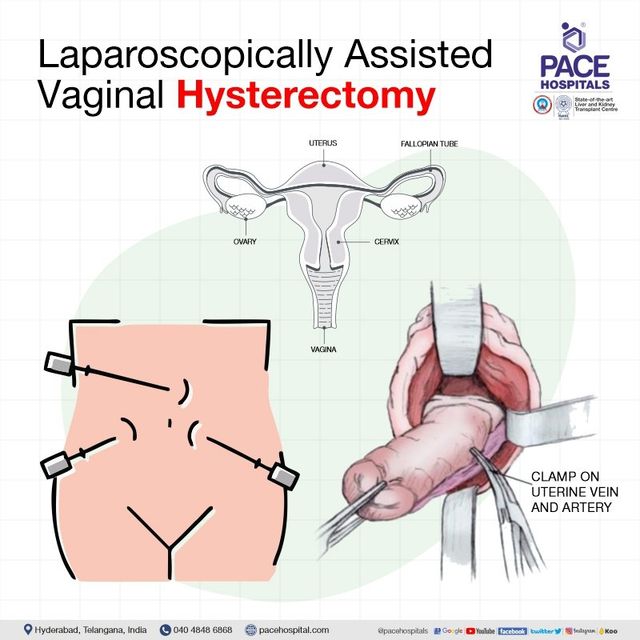
TLH (Total Laparoscopic Hysterectomy): Entire uterus and cervix removed laparoscopically.
LAVH (Laparoscopic-Assisted Vaginal Hysterectomy): Part of the surgery done laparoscopically and removal through the vagina.
Supracervical / Partial Hysterectomy: Only the upper uterus removed; cervix left in place.
Robotic-Assisted Laparoscopic Hysterectomy: Uses a robotic system for enhanced precision.
Gynocologist
Your email address will not be published. Required fields are marked *