
Learn what to expect when visiting the Emergency Department. Learn More


A laparoscopic myomectomy is a minimally invasive surgery used to remove uterine fibroids (leiomyomas) while preserving the uterus. It is often chosen by women who wish to maintain fertility or want to keep their uterus for personal or medical reasons.
The surgeon makes small abdominal incisions and uses a laparoscope (a thin camera tube) and specialized instruments to remove fibroids with precision and minimal tissue trauma.
Laparoscopic myomectomy is recommended for women with symptomatic fibroids causing:
Heavy menstrual bleeding
Pelvic pain or pressure
Infertility or recurrent pregnancy loss due to fibroids
Urinary frequency or constipation caused by fibroid size
Rapidly enlarging fibroids (after evaluating malignancy risk)
Desire to preserve the uterus
Intramural: Within the uterine wall
Subserosal: Bulging outward from the uterus
Pedunculated: Attached by a stalk
Selected submucosal fibroids (depending on size/location), though these are often removed hysteroscopically
Small incisions are made in the abdomen.
CO₂ gas is used to inflate the abdomen for visibility.
A laparoscope and instruments are inserted.
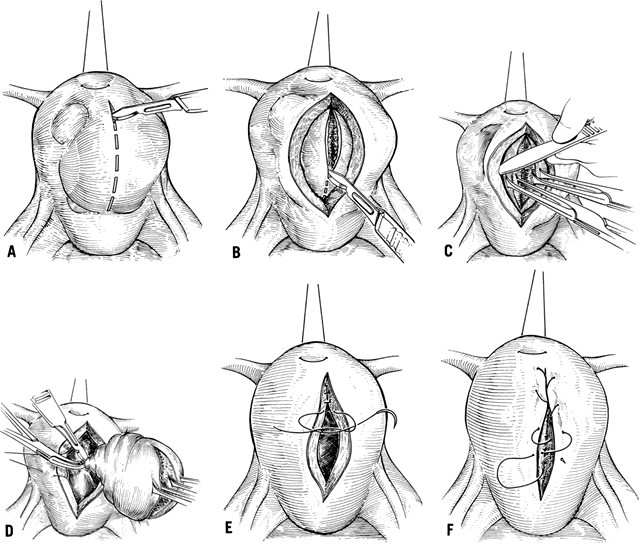
Fibroids are located and the uterine muscle is incised.
Fibroids are carefully removed, often in pieces (morcellation) if large.
The uterine muscle is sutured in multiple layers to restore strength.
The abdomen is cleansed and incisions are closed.
Smaller incisions and minimal scarring
Less postoperative pain
Reduced blood loss compared to open surgery
Faster recovery (1–3 weeks)
Preservation of fertility
Shorter hospital stay (often same day or one night)
Bleeding
Uterine scarring or adhesions
Injury to nearby organs (bladder, bowel, vessels)
Fibroid recurrence (fibroids may grow again)
Rare need for conversion to open surgery
Potential for uterine rupture in future pregnancy (depends on depth/size of incisions)
Most patients:
Walk on the same day
Resume normal activities within 1–2 weeks
Experience temporary shoulder-tip pain from CO₂ gas
Need to avoid heavy lifting and strenuous activity for 4–6 weeks
Are advised to delay pregnancy for 3–6 months to allow full uterine healing
Ideal candidates typically have:
A moderate number of fibroids
Fibroids sized generally up to 8–10 cm (surgeon-dependent)
Minimal to moderate pelvic adhesions
Desire for future fertility
Normal overall health allowing for minimally invasive surgery
Gynocologist
Your email address will not be published. Required fields are marked *
